


Gatun Locks & Gatun Lake Tour Guide (Wildlife, Boats & History)
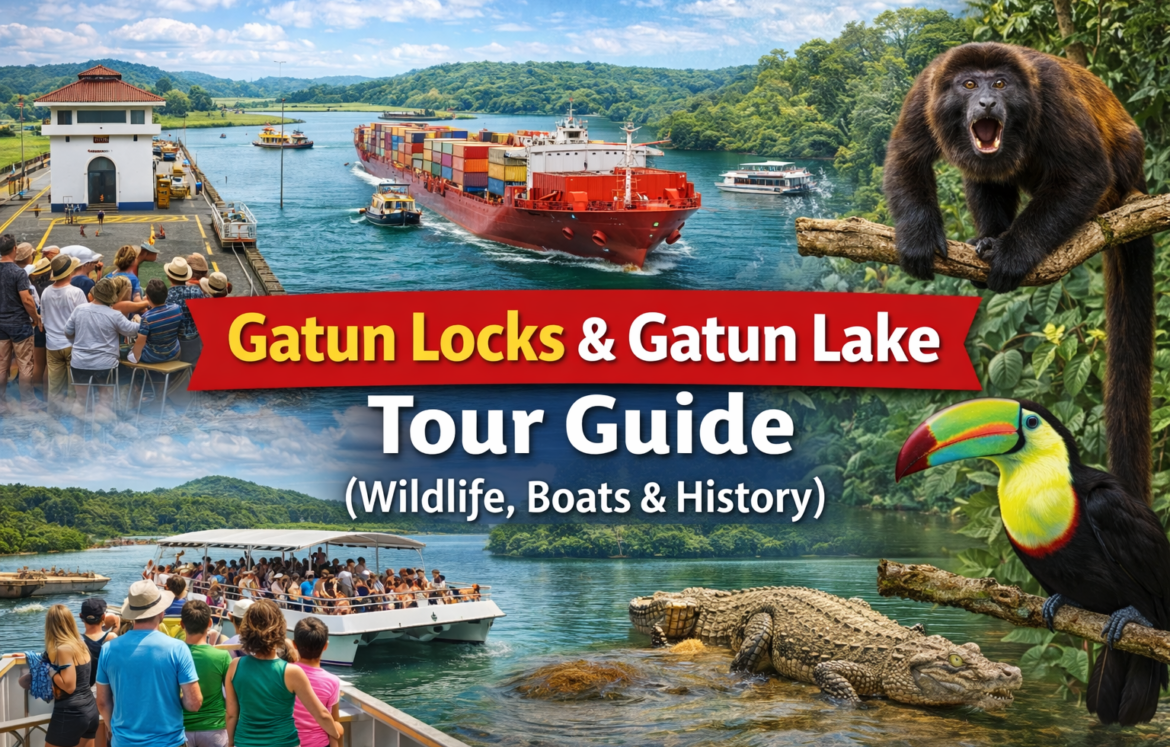
You can watch massive ships pass through the Gatun Locks and then glide into Gatun Lake while spotting monkeys, sloths, crocodiles, and colorful birds up close. This tour gives you a direct look at how the Panama Canal works and a front-row seat to rainforest wildlife in one trip.
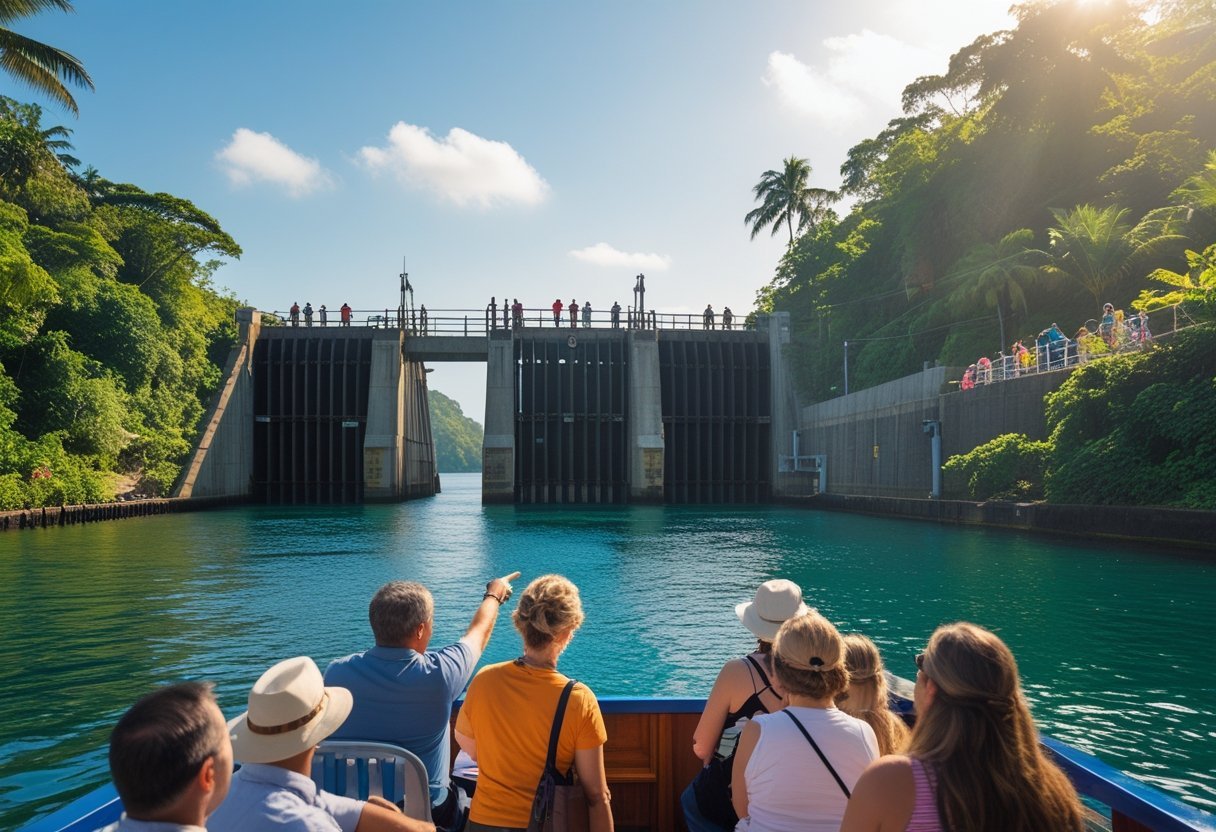
Expect clear explanations of lock operations, guided boat time on Gatun Lake, and stops for short rainforest walks and wildlife viewing. Your visit will mix engineering history, boat spotting, and nature—so you’ll know what to see, where to go, and how to get the most from each part of the experience.
Overview of Gatun Locks & Gatun Lake
Gatun Locks lifts ships about 85 feet from the Atlantic side up into Gatun Lake, a man-made freshwater reservoir that forms the central waterway of the Panama Canal. You will see massive lock chambers, locomotives (“mules”) guiding vessels, and rainforest-lined shores that host wildlife like monkeys and crocodiles.
Location and Accessibility
Gatun Locks sit on the Caribbean (Atlantic) entrance of the Panama Canal near the town of Colón. The locks are next to the Gatun Lake shoreline, about a 30–45 minute drive from Colón or the Canal Zone visitor points, depending on traffic.
You can reach the area by private car, tourist bus, or organized boat tours that operate on Gatun Lake. The locks have an observation deck and visitor areas for watching transits. Note that large cruise ships and commercial traffic follow scheduled transit slots, so viewing times can vary.
If you plan a boat tour on Gatun Lake, many operators launch from nearby marinas and include wildlife spotting. Bring sunscreen, water, and binoculars. Accessibility for mobility-impaired visitors is limited in some viewing areas, so check ahead for ramps and assistance.
Historical Background
Gatun Lake formed in 1913 when engineers dammed the Chagres River to create the reservoir needed for the original Panama Canal. The Gatun Locks were completed with the canal’s first construction and opened in 1914, becoming a key engineering achievement of the early 20th century.
The locks originally used gravity-fed freshwater from Gatun Lake to raise and lower ships through three chambers. Over time, upgrades and maintenance preserved the site’s function while newer lock complexes were added elsewhere to handle larger ships.
You can still observe original features like the lock chambers and mules, alongside modern signage and visitor facilities that explain early construction methods and the role of the lake in canal operations.
Importance of the Panama Canal
Gatun Lake serves as the main water source and central passage for Atlantic-to-Pacific transits. By raising ships into the lake, the Gatun Locks allow them to cross the Isthmus of Panama without sea-level excavation across the entire route.
The lake also stores the huge volumes of freshwater required to operate lock chambers. Each transit uses millions of gallons of water drawn from Gatun Lake, making its conservation and watershed management vital to canal operations.
Operationally, the Gatun Locks remain critical for many vessel classes despite the canal’s newer, larger locks. The locks support commercial shipping, cruise transits, and local boat traffic, all while passing through a biodiverse rainforest that adds ecological and tourist value.
Guided Tours and Visitor Experience
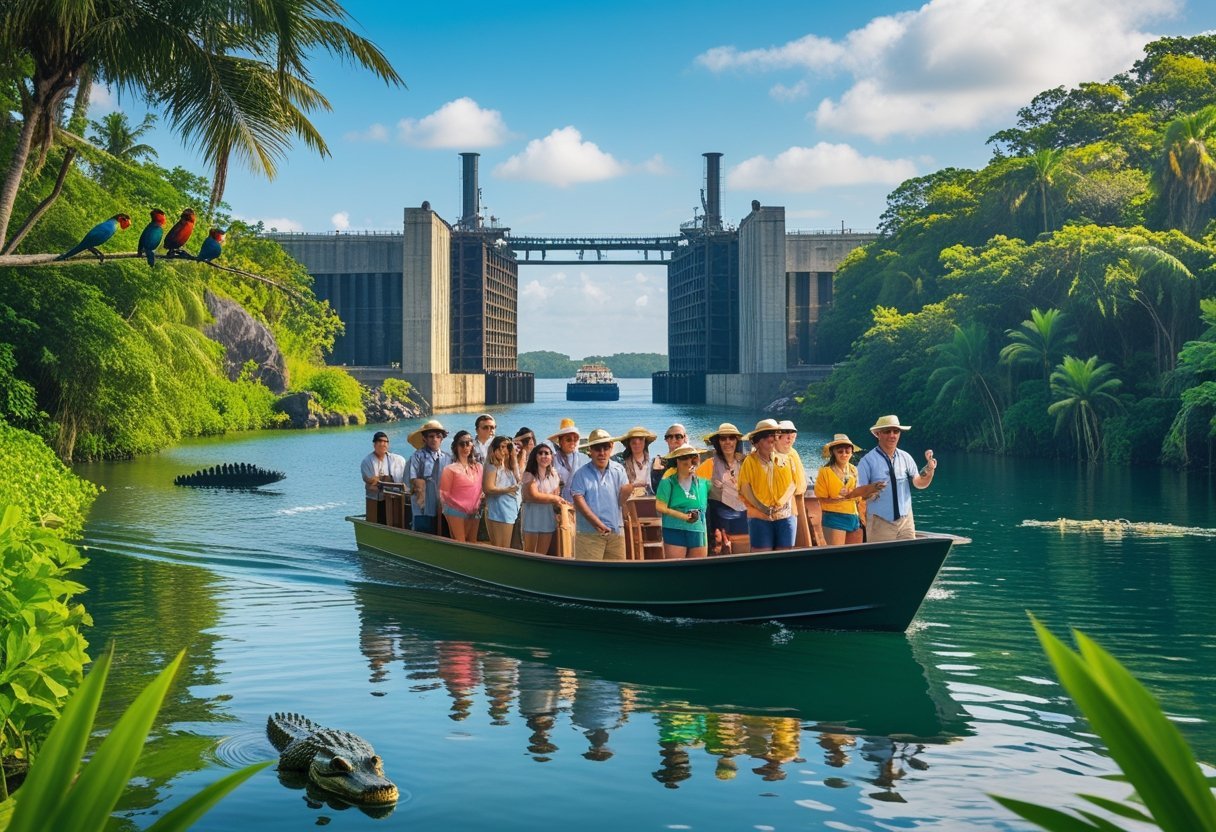
You will visit the Miraflores Visitor Center, board a boat on Gatun Lake, and see wildlife and canal operations up close. Tours combine lock viewing, guided nature cruises, and expert commentary.
Popular Tour Options
Most visitors choose one of three main formats: half-day canal + Miraflores, full-day Gatun Lake wildlife trips, or private boat charters. The half-day option pairs the Miraflores Visitor Center (observation decks, exhibits, and often an IMAX film) with a short downstream visit to watch ships transit the locks. Full-day Gatun Lake tours include a longer boat ride into backwater channels to look for monkeys, sloths, crocodiles, and tropical birds. Private charters give you a flexible route, more wildlife time, and the option to fish for peacock bass.
Compare features at a glance:
- Half-day: best for tight schedules and lock viewing.
- Full-day: best for wildlife and photography.
- Private charter: best for groups and flexibility.
What to Expect During the Tour
You will start at the Miraflores Visitor Center or a meeting point in Panama City. At Miraflores, expect timed viewing windows, interpretive panels, and a chance to watch ships use the locks from the observation deck. Listening to a short talk or film helps you understand lock mechanics and canal history.
On the lake, guides steer through calmer back channels and point out wildlife with binoculars. Boat rides typically last 2–4 hours on lake-focused tours. Guides highlight species, point out canal infrastructure like Gatun Dam, and may stop at shoreline trails or small islands for closer viewing. Bring sun protection, insect repellent, and a waterproof bag for electronics.
Best Times to Visit
Morning departures give the calmest water and the best light for photos. Wildlife is most active early; expect more monkey and bird sightings before mid-afternoon. For lock viewing, arrive before scheduled ship transits—check the Miraflores schedule or confirm with your tour operator.
Avoid mid-day heat between 11:00 and 15:00 on sunny days. The dry season (December–April) offers clearer skies and easier boat travel, while the rainy season (May–November) brings more lush vegetation and higher river levels that can increase wildlife visibility. Book popular tours at least a week ahead during high season.
Wildlife and Natural Attractions
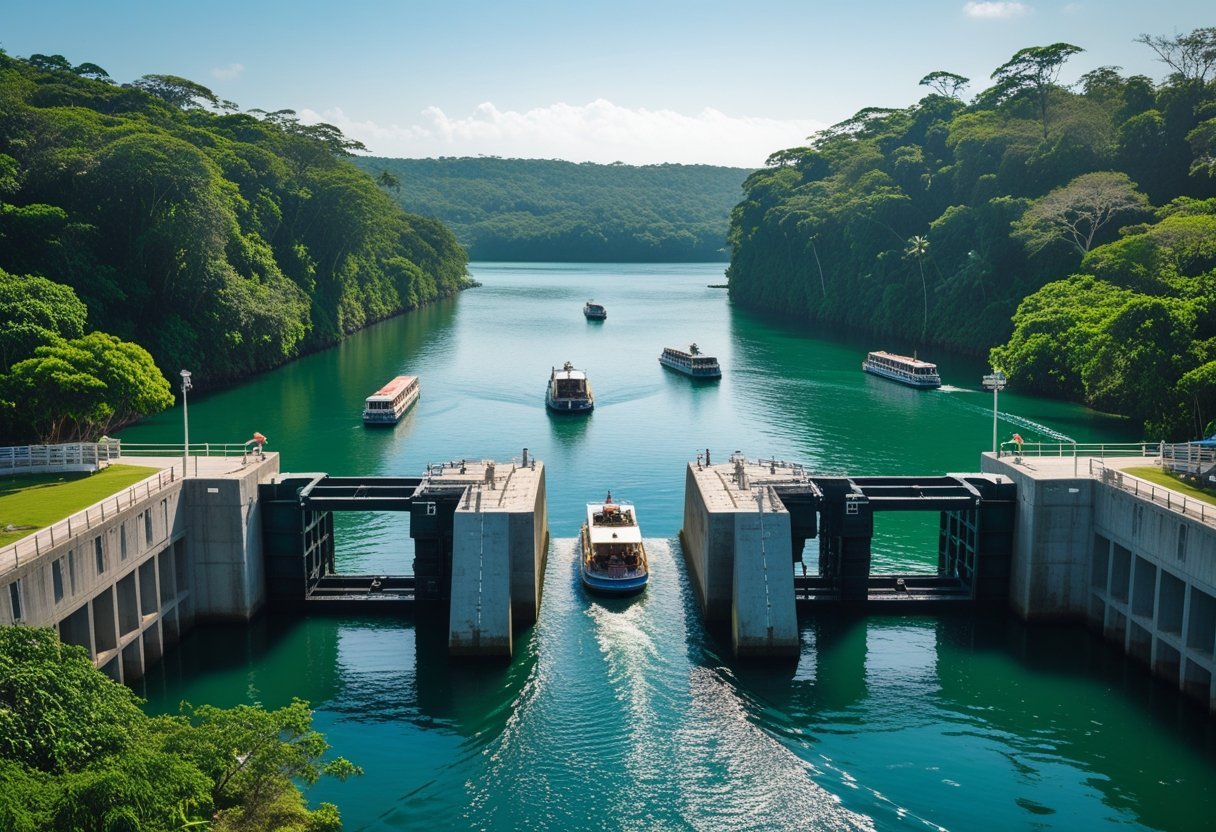
You’ll see monkeys, crocodiles, and dozens of bird species along the lake’s forested shorelines. The water and islands host both common rainforest species and animals that adapted to life near a busy shipping route.
Native Animals and Birds
You can spot white-faced capuchins, howler monkeys, and spider monkeys on the tree-lined islands and riverbanks. Guides often take you close to Monkey Island clusters where monkeys move between trees and hunt for fruit.
Crocodiles (American crocodile) and spectacled caimans sun on muddy banks and near narrow channels. Keep a respectful distance; they are often visible from the boat’s bow.
Birdwatching yields toucans, keel-billed toucans, jabiru, anhingas, and dozens of migrant and resident songbirds. You may also see raptors like the crested eagle and osprey hunting over open water. Bring binoculars and stay quiet when the guide points to nests or feeding flocks.
Flora of Gatun Lake
The shoreline hosts lowland tropical rainforest with emergent trees, buttonwood, and mangrove-like stands in protected coves. Big kapok and ceiba trees rise above the canopy and often host epiphytes and bromeliads.
You’ll notice dense understory vines and heliconias near the water’s edge, which attract hummingbirds and insects. Floating vegetation and water lilies appear in calm coves and support fish and amphibian life.
On the artificial islands, secondary growth shows how quickly rainforest reclaims disturbed land. Your guide can point out plants used by locals for food, medicine, or canoe construction.
Photography Opportunities
Golden hours—early morning and late afternoon—give the best light for wildlife shots. Use a zoom lens (200–400mm) for monkeys and birds; a wide-angle lens works well for jungle-and-ship contrast shots.
Focus on composition: include tree branches or water reflections to give scale. Shots of a cargo ship passing through a channel with a toucan or crocodile in the frame create striking contrasts.
Keep ISO reasonable to avoid noise, and stabilize the camera on the boat rail or a small tripod. Ask the guide to position the boat quietly and avoid sudden movements to improve your chances of clean, sharp photos.
Ships, Boats, and Transit Operations
You will see large commercial ships, smaller support vessels, and local tour boats using Gatun Lake and the locks. The locks raise ships about 85 feet and require tugs, locomotives, and dredging to keep traffic moving and channels deep enough.
Types of Vessels Passing Through
You will commonly spot Panamax and neo-Panamax container ships, tankers, and bulk carriers. These are the biggest users and fit the locks’ 1,000 ft by 112 ft chambers. Cruise ships transit too, though less often than cargo vessels.
Smaller vessels include tugboats that guide big ships, dredges that remove silt from channels, and service boats that support lock operations. Tourist boats operate on Gatun Lake near Monkey Island and along the canal margins, bringing you close to wildlife and lock activity.
How Gatun Locks Operate
You will watch a two-stage lift system that raises ships roughly 85 feet between sea level and Gatun Lake. Each lock chamber fills and empties through culverts and valves; water flows by gravity, not pumps, moving ships up or down in steps.
Locomotives called “mules” and tugboats keep vessels centered and steady while valves open. Transit takes time: a full locking can last 30–60 minutes per set, depending on traffic and ship size. Dredging crews work constantly to meet depth needs for large, modern ships.
Observation Decks and Viewing Areas
You can use covered observation decks at Gatun Locks to watch vessels enter and exit the chambers. These decks give clear sightlines to lock gates, mules, and the chamber floor where water rises and falls.
Other viewing spots include road-side platforms and visitor areas near the lock control buildings. Guided tours may take you to higher vantage points or boat docks on Gatun Lake for close-up views of ships transiting and wildlife sightings from the water.
Cultural and Historical Significance
This site shaped global trade and still shapes daily life for people who live near the canal. You will see engineering feats and living communities that grew around the locks and Gatun Lake.
Engineering Marvels
You can stand at Gatun Locks and watch ships climb and descend 26 meters using massive lock chambers and gravity-fed water from Gatun Lake. The locks opened in 1914 as part of the original Panama Canal. They use concrete gates, filling culverts, and valves that move millions of liters of water with each transit.
The creation of Gatun Lake required damming the Chagres River and flooding large areas to form a reservoir. That reservoir not only powers the locks but also became a major navigation pool and wildlife habitat. Modern widening and lock-tender upgrades have kept the system functional for 20th- and 21st-century shipping demands.
Key facts:
- Height change: ~26 meters (Gatun Locks flight).
- Opening year: 1914.
- Function: raise/lower ships between the ocean and the lake using freshwater.
Local Communities and Traditions
You will meet families and workers whose lives are linked to the canal’s operation and tourism. Towns like Gatun grew as housing and service centers for lock operators, canal workers, and their descendants. Local economies rely on canal jobs, boat tours, fishing, and guiding visitors into the rainforest.
Traditional celebrations blend Panamanian national holidays with canal-centered customs. Fishermen pass down knowledge about peacock bass and river navigation. Guides often share stories about the canal’s construction, the communities displaced when Gatun Lake formed, and how local conservation efforts protect both livelihoods and wildlife.
Frequently Asked Questions
This section answers common practical questions about wildlife, boat choices, access rules, conservation steps, historical effects on operations, and local economic impacts related to Gatun Locks and Gatun Lake.
What types of wildlife can one expect to see during a Gatun Lake tour?
You can often see howler monkeys, capuchin monkeys, and spider monkeys on islands and shorelines.
Look for sloths tucked in tree canopies and toucans, kingfishers, and herons along the water.
Crocodiles and caimans may bask on quieter banks, and you might spot dolphins or otters near open water.
Peacock bass and other freshwater fish are common if your tour includes fishing or close shoreline views.
How does the history of the Gatun Locks influence current operations?
The Gatun Locks opened in 1914 as a key part of the original Panama Canal design.
Their lock-and-lake system set the pattern for how ships are raised and lowered through the canal today.
Modern operations rely on the same basic lock function, but they use updated control systems and maintenance routines.
You will see historic infrastructure alongside newer equipment that improves safety and efficiency.
What boat tour options are available to experience the Gatun Locks?
You can join short guided boat tours that focus on wildlife around Gatun Lake and Monkey Island.
Full-day excursions combine the Miraflores or Gatun Locks viewing with lake transit and wildlife spotting.
Small-group and private boats offer more flexible routes and closer wildlife viewing.
Larger sightseeing boats provide commentary and easier boarding for families and older visitors.
Can visitors access the Gatun Locks, and if so, what are the entry requirements?
You can visit public viewing areas at Gatun Locks without a special permit during visitor hours.
If you plan to tour the lake by boat, book with a licensed operator who handles transport and park permissions.
Bring photo ID and follow any security screening at locked visitor centers.
If you want guided access to islands or restricted shoreline areas, confirm permits and fees with your tour provider.
What measures are in place to preserve the ecosystem of Gatun Lake during tours?
Tour operators use defined routes and speed limits to reduce shoreline erosion and disturbance.
Guides instruct visitors to avoid feeding wildlife and to keep a safe distance from animals.
Protected zones and park rules limit where boats can land and where wildlife may be approached.
Some operators follow best practices for waste management and use low-impact engines to lower noise and pollution.
How have the Gatun Locks impacted the local community and economy over time?
The locks created jobs in canal operations, tourism, and related services that support local towns.
Tourism around Miraflores, Gatun Locks, and Gatun Lake brings consistent income to guides, boat operators, and nearby businesses.
Canal operations spurred infrastructure growth, such as roads and visitor centers, which improved access to the area.
The balance between economic benefit and environmental protection remains an ongoing local focus.