


Panama Canal at Miraflores Locks (Visitor Center & Tours)
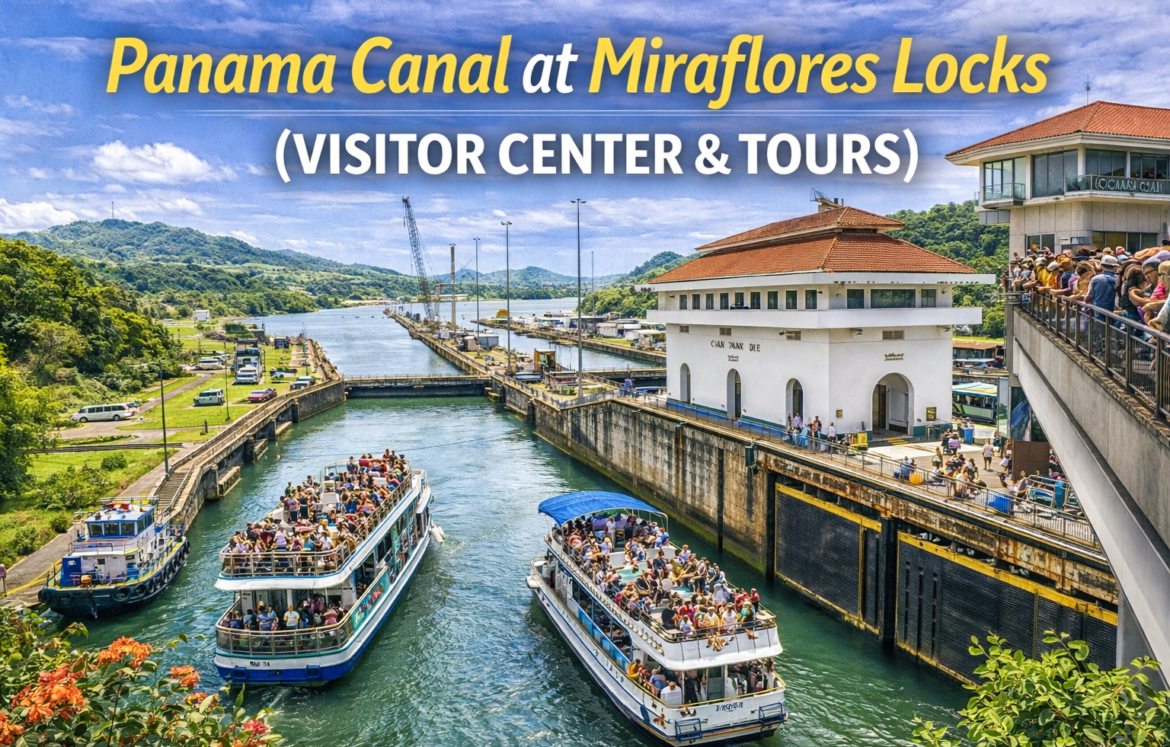
You can see massive ships rise and fall Panama Canal at Miraflores Locks while learning the canal’s history and how it works. I’ll show you the best times to watch transits, what the Miraflores Visitor Center offers, and which tour fits your schedule so you get the most from your visit.
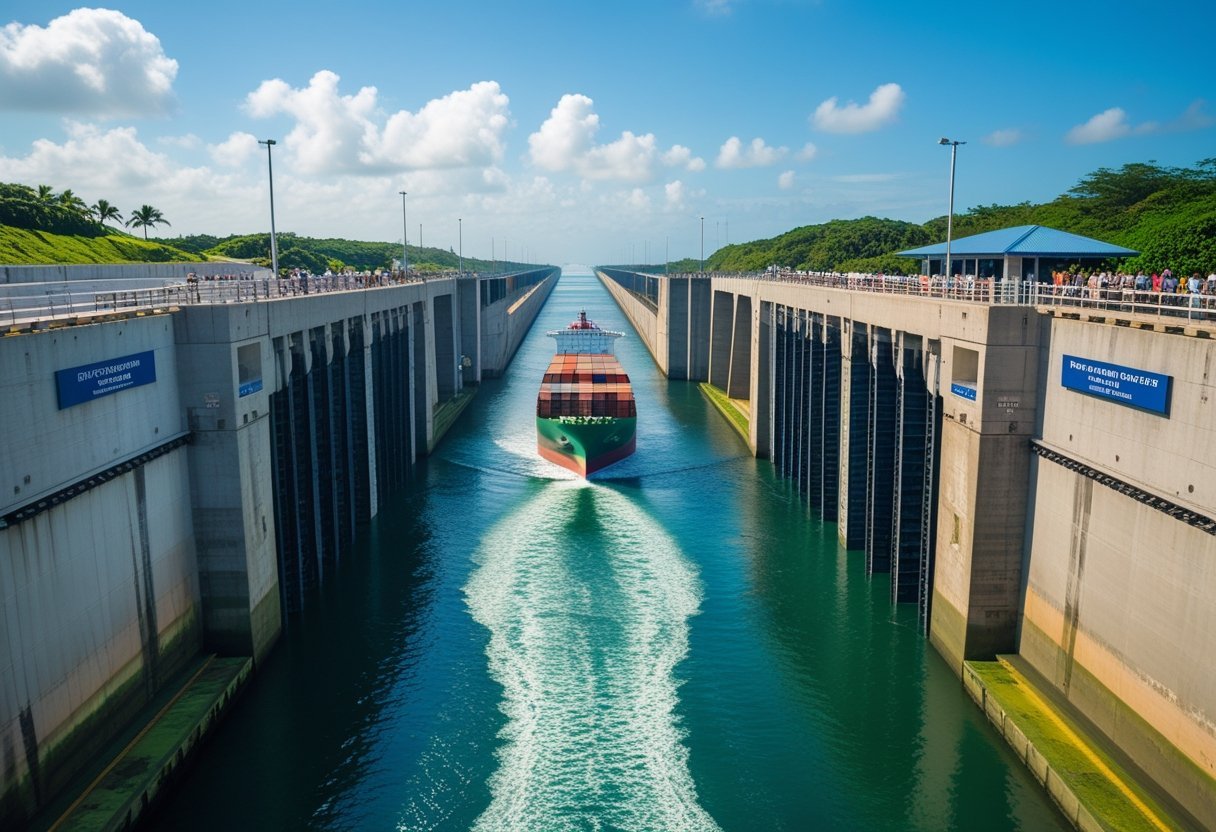
I guide you through practical details like ticketing, observation decks, and nearby dining so you won’t waste time or miss key moments. Expect clear tips on tours, transit schedules, and things to do before or after your visit that make planning simple and stress-free.
Overview of the Panama Canal at Miraflores Locks
I describe what makes Miraflores a key stop for visitors and how the site works day to day. Expect facts about the locks’ role, how to reach them, and the main sights to see.
Significance of Miraflores Locks
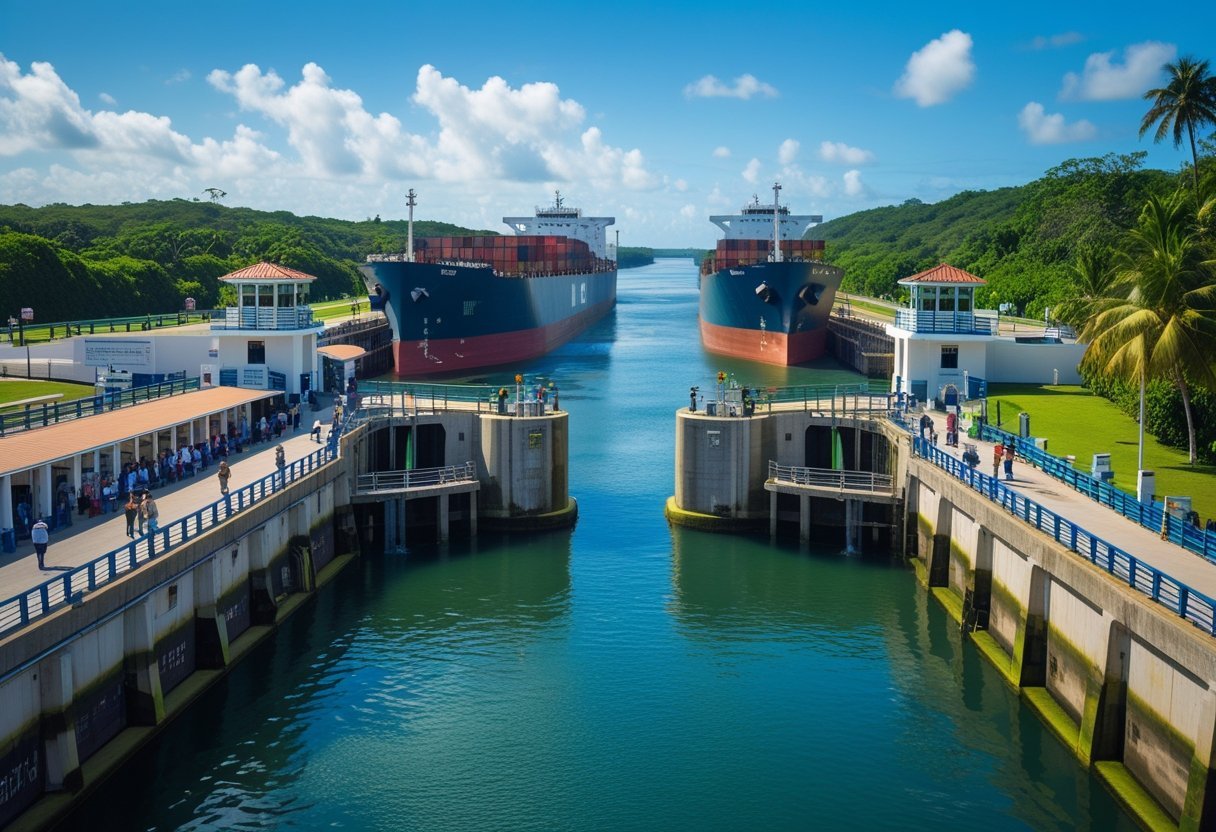
I consider Miraflores one of the most visible parts of the Panama Canal because it handles the Pacific entrance and shows the lock mechanics up close. The Miraflores Locks lift ships roughly 16.5 meters (54 feet) from sea level to the canal’s higher elevation, letting cargo and cruise ships cross between oceans without sailing around South America.
The site also serves as a public education hub. The Miraflores Visitor Center has exhibits and an IMAX film that explain canal history, the lock operation, and the 2016 expansion. Watching a large freighter pass through the chamber gives a concrete sense of scale and engineering.
Location and Accessibility
I find Miraflores just west of central Panama City, near the coastal district of Balboa. The exact location places it within easy reach of hotels and the Amador Causeway, making it a common half-day trip for tourists.
Getting there by public transport is possible: buses and taxis serve the area, and many tours include hotel pickup. Visitors should aim for midday or early afternoon to increase the chance of seeing ship transits. The visitor center offers parking, restrooms, and a ticketed observation area with clear views of the locks.
Key Features of Miraflores Locks
I highlight several main features visitors will notice:
- Observation decks: Elevated platforms let you watch ships move through the chambers a few meters away.
- Visitor Center exhibits: Interactive displays explain lock gates, water use, and the 2016 expansion.
- IMAX theater: A short film presents the canal’s history and engineering in clear visuals.
- Lock mechanics visible: You can see miter gates, locomotives (mules), and lock chambers in operation.
- Ship schedule board: Displays upcoming transits so you can plan your visit.
These elements combine to create a hands-on learning experience about the Miraflores Locks and the Panama Canal at Miraflores. For a practical guide on visiting, I reference the official Miraflores Visitor Center site for current opening hours and ticket information: Miraflores Visitor Center – Panama Canal.
Visitor Center at Miraflores
I visited the Miraflores Visitor Center to see how the Panama Canal at Miraflores Locks operates up close. The center blends history, engineering, and clear viewing areas so visitors can watch ships move through the Miraflores Locks.
Exhibition Halls
I walked through multi-level exhibition halls that trace the Panama Canal history and expansion. Panels show construction timelines, engineering diagrams, and photos of early excavation. Labels identify key figures and dates.
A model of the canal section near Miraflores, Panama, lets me compare lock sizes before and after the expansion. I found the maps and cross-sections especially helpful for visualizing water flow and lock chambers.
The halls include bilingual captions (Spanish and English) and seating areas for the 15-minute film about canal operations. Timetables and transit info are posted so I could plan when to watch a ship pass through.
Observation Decks
The main observation deck sits on the fourth floor with a wide view of the Panama Canal at Miraflores Locks and the shipping channel. I used the tiered platform to watch cargo ships enter the south lock and then rise in stages.
Glass panels and covered walkways offer clear sight in rain or sun. Binocular stations and zoom cameras are available for closer looks at tugs and locomotives (“mules”) that guide vessels.
Signage marks lookout points and explains what phase of the transit I’m seeing, which helped me follow the sequence from locking to release.
Interactive Displays
Interactive displays let me simulate lock operations and control water levels on touchscreen consoles. I used a digital control panel that shows gate positions, valve openings, and the sequence needed to move a ship through Miraflores Panama.
A hands-on gravity and buoyancy demo explains how ships float while the lock fills and empties. Kids and adults can press buttons to trigger animations that match real lock timings.
Staff-run demonstrations appear at scheduled times, and staff answer technical questions about ship scheduling and tug procedures. I found these interactions clarified how the Panama Canal at Miraflores Locks section fits into global shipping routes.
Tour Options
I describe the main ways to visit Miraflores Locks so you can pick the best fit for your time, budget, and interests. Expect options that range from guided tours with commentary to self-paced visits and group packages for families or larger parties.
Guided Tours
I book guided tours when I want history, context, and a guaranteed ship sighting. Most guided tours include hotel pickup, a guided walk through the Miraflores Visitor Center, and time on the observation terraces to watch ships transit the Miraflores Locks. Guides explain lock mechanics, the canal’s construction, and modern operations in plain language.
Typical features:
- Fixed schedule with bilingual guides on many tours.
- Entry coordination so you avoid long ticket lines at the Miraflores Visitor Center.
- Optional extras like the IMAX Panama Canal film or a stop at the visitor exhibits.
I choose guided tours when I have limited time or want a deeper explanation of what I’m seeing. Tours often promise close views of large vessels and timed arrivals to maximize ship-watching chances.
Self-Guided Experiences
I pick a self-guided visit when I want more time and control over pacing. The Miraflores Visitor Center has viewing platforms, museum exhibits, and an IMAX theater you can explore on your own. I buy tickets at the Miraflores Visitor Center ticket office or check official hours online before I go.
Self-guided tips:
- Arrive early or late afternoon to increase chances of seeing ships.
- Bring binoculars, sunscreen, and a hat for the outdoor terraces.
- Read the explanatory panels in the exhibits for background on the Panama Canal at Miraflores Locks.
This option costs less and lets me linger at exhibits or step outside for photos. I stay aware of posted schedules for ship transits and the IMAX showtimes.
Group and Family Packages
I look for group or family packages when traveling with children or larger groups. Many local operators and booking sites sell half-day tours that combine Miraflores Locks visits with guided commentary, transportation, and sometimes the IMAX film. Packages vary by age pricing and may offer discounts for residents or children.
What to expect:
- Group pickup and return to central Panama City hotels.
- Reduced per-person rates for groups; family tickets often bundle admission plus film.
- Options that guarantee a ship-watching window and include a guide for kids.
I chose these packages to simplify logistics and keep costs down. They work well for school groups, families, or travelers who prefer a set itinerary and shared commentary about the Panama Canal at Miraflores Locks.
Scheduling Your Visit

I focus on when to go, what hours the Visitor Center keeps, and how ship movements affect what you see. Plan with those three details to maximize chances of watching ships pass and to avoid long waits.
Best Times to Visit
I recommend visiting mid-morning or late afternoon on weekdays. Those times often show steady ship traffic and smaller crowds than weekends. If you want quieter viewing, arrive around 9:00–10:30 a.m.; crowds build after 11:00 a.m. and again near 3:00–4:00 p.m.
Weather matters. Panama’s dry season (mid-December to April) gives clearer views and more comfortable waiting. Bring sun protection for the observation deck and light rain gear during the wet season.
If you want IMAX or exhibits with minimal lines, plan a weekday visit and combine the museum with the observation deck visit.
Miraflores Locks Hours
The Miraflores Visitor Center typically opens early and closes in the late afternoon, but hours can change for holidays or maintenance. I check the official Miraflores Visitor Center page for exact times before I go: Miraflores Visitor Center – Panama Canal.
Ticket counters and IMAX showtimes follow the Visitor Center schedule. Arrive at least 30 minutes before your planned viewing time to buy tickets and get a good spot on the observation deck. If you travel by rideshare, allow extra time for traffic between Panama City and the center.
Some guided tours and cruise-ship excursions operate on a different timetable. Confirm any tour pickup times and whether they include guaranteed ship viewing.
Ship Transit Schedule
The Panama Canal at Miraflores Locks operates on a maritime timetable, not a tourist one. I watch the actual ship transit schedule if I need to see a specific passage. Large commercial vessels pass through throughout the day; timing depends on vessel type, draft, and canal traffic.
The Miraflores Locks often process ships in convoys. Expect short waits when a lock cycle finishes and longer waits if a convoy is scheduled for another lock chamber. If seeing a ship pass is essential, book a timed tour that guarantees vessel viewing or visit during known busy shipping windows—typically morning and late afternoon.
I check local guides and the Panama Canal’s visitor resources for updates on lock operations and planned closures. That keeps expectations realistic and helps me choose a visit time with the best chance to watch ships move through the locks.
Canal Operations and Ship Transits

I watch the Miraflores Locks move ships between ocean levels using timed procedures, trained crews, and heavy equipment. I focus on how the locks fill and drain, what kinds of vessels I can expect, and how daily operations keep traffic flowing.
How the Locks Work
The Miraflores Locks raise and lower ships using chambers that fill and empty with freshwater. Each chamber has massive steel gates and culverts that let water flow in or out. Operators open valves to let water pass through the culverts; the water level changes until it matches the next chamber or the sea.
Tugs and locomotives, called “mules,” guide vessels into position and hold them steady during the transfer. I note that the process uses gravity and controlled valve timing, not pumps, so timing and coordination matter. Locks take about 20–30 minutes per chamber for a typical transit, depending on ship size and traffic.
Types of Vessels Passing Through
At Miraflores I see container ships, bulk carriers, LNG tankers, cruise ships, and occasionally naval vessels. Container ships are the most common and often the widest, so they need careful alignment in the lock chambers. Cruise ships bring many visitors who watch transits from observation decks.
Smaller ships, like yachts and small freighters, transit more quickly and sometimes use convoy slots between larger transits. Tankers and LNG carriers require extra safety checks before entry. I watch for vessel-specific rules: draft limits, beam limits, and hazardous cargo declarations that can change scheduling and locking procedures.
Daily Operations Overview
Daily operations at Miraflores follow fixed transit windows and vessel prioritization rules set by Canal authorities. I check published transit schedules and notice peak periods mid-morning and late afternoon when commercial ship traffic is highest. Panama Canal at Miraflores Locks pilots board ships to navigate the approach, and lock operators coordinate gate and valve movements from the control towers.
Routine tasks include lock maintenance, water-level monitoring, and scheduling tug and locomotive assignments. Security checks and customs clearance happen off the lock deck but affect timing. When traffic builds, the Canal authority may create convoys—groups of ships transiting together—to keep throughput steady and predictable.
Dining and Amenities
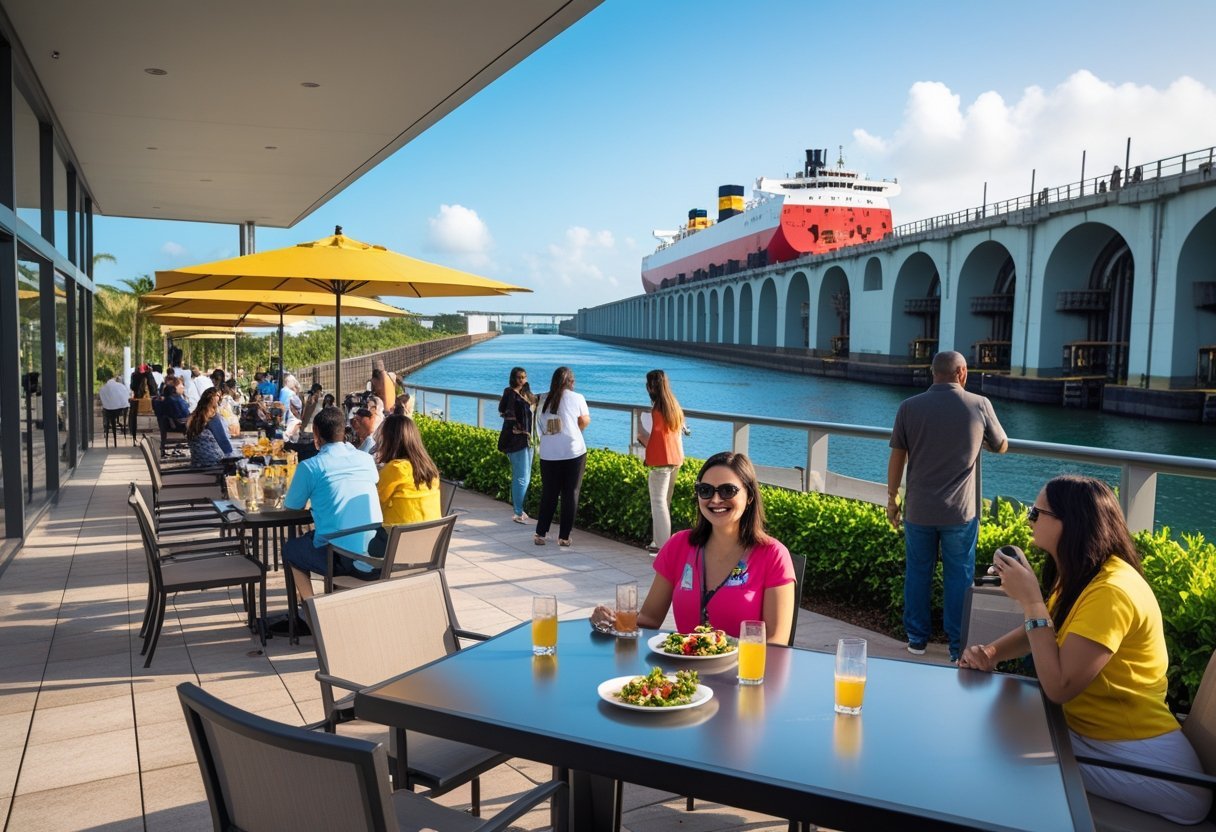
I describe where to eat, what to buy, and which facilities make a visit comfortable. The options range from a sit-down restaurant with canal views to small cafes and well-stocked gift shops.
Restaurants and Cafes
I often choose the International Miraflores Restaurant when I want a full meal while watching ships pass the locks. The restaurant offers a buffet and plated options, and many tables face the observation deck so you can eat while tracking a vessel’s transit. Service is geared to tourists, so menus include local dishes and familiar international choices.
For quicker stops, the Miraflores Visitor Center has a cafe with sandwiches, coffee, and cold drinks near the main viewing area. Seating is limited but convenient if you plan to return to the observation deck between lock operations. Note opening hours can change with holiday schedules and lock activity, so I check times before I go.
Gift Shops
I buy small souvenirs, guidebooks, and Panama-themed items at the Visitor Center gift shop. The shop carries model ships, postcards, and t-shirts branded with Miraflores and Panama Canal logos. Prices are tourist-level, so I compare a few items before buying.
The shop also stocks practical items like bottled water, sunscreen, and hats—useful for spending time on the outdoor decks. If I want higher-end gifts or hotel-quality goods, I look to nearby Panama City stores, but for immediate keepsakes tied to Miraflores (Panama) the on-site shop is the most convenient choice.
Nearby Attractions and Activities

I list nearby options that pair well with a visit to the Miraflores Visitor Center and help you plan time for history, nature, and quick city stops.
Other Canal Lock Sites
I recommend visiting other lock sites if you want different views of the Panama Canal’s operations. Agua Clara on the Atlantic side shows the newer, larger lock chambers used by post-Panamax ships. It sits near Colón and has wide observation areas and educational displays that contrast with Miraflores’ closer, more intimate views.
Gatun Locks, part of the original transits on the Atlantic side, lets you see the canal’s lake and canal-steering infrastructure. Each site offers distinct photo angles, ship traffic patterns, and explanations of lock mechanics. Plan for travel time—trips between Miraflores and Atlantic-side sites can take over an hour by car. Check opening hours before you go.
Nature Trails and Parks
I often pair a lock visit with a short nature stop to balance the engineering focus. Nearby, Amador Causeway provides seaside views, walking paths, and bike rentals along the Pacific entrance to Panama Bay. It’s convenient for a relaxed stroll and skyline photos of Panama City.
For greener trails, Metropolitan Natural Park sits a short drive from Miraflores and offers marked paths, lookout points, and urban wildlife like howler monkeys and toucans. Trails vary from easy 20–30 minute loops to steeper 1–2 hour hikes. Bring water, bug spray, and sturdy shoes. If you want maps or guided birding, local tour operators around Miraflores can arrange short guided walks.
Frequently Asked Questions
I cover exact opening times, how to buy tickets, tour options and booking, live camera access, main exhibits, and how long to stay. Read each question for a clear, practical answer you can use when planning your visit.
What are the operating hours for the Miraflores Visitor Center?
I check current schedules before travel because hours can change for holidays or events. Typical public hours are morning through late afternoon, with peak ship-watching times around midday.
For the most reliable hours, confirm directly on the Miraflores Visitor Center page at Visit Canal de Panamá: Miraflores Visitor Center.
How can I purchase tickets for the Miraflores Visitor Center in Panama?
I buy tickets either at the center’s ticket office or online when available. Online sales let you skip lines, while in-person purchases work if you arrive early.
Check the visitor center’s official page for current ticket options and prices at Miraflores Visitor Center.
Are there guided tours available at the Miraflores Locks, and how can I book them?
I recommend guided tours for deeper history and engineering details. Tours often include access to exhibits, the observation deck, and an IMAX film.
You can book guided tours through local operators and tour sites that list Panama Canal trips and FAQs, such as Panama Canal Tours FAQ.
Is there a live camera feed available to view the Miraflores Locks online?
I know some sites and services offer live or near-live footage of the locks, but availability can vary. Public webcams may not run continuously and can be limited by maintenance or security.
For visitor tips and reports about viewing times and crowding, I refer to visitor accounts like Visiting the Panama Canal’s Miraflores Locks.
What exhibits and activities are offered at the Miraflores Visitor Center?
I find the center includes interactive exhibits on canal history, engineering displays, and an IMAX or multimedia theater. The observation decks let you watch ships transit the locks up close.
Visitor reviews and guide pages outline these features and what to expect during a visit; see the Miraflores Visitor Center guide for more details.
Can you recommend the optimal duration for a visit to the Miraflores Visitor Center?
I suggest planning 1.5 to 3 hours. That timeframe covers exhibits, the film, and enough time on the observation deck to watch at least one ship pass.
If you want to catch multiple ship passages or join a guided tour, allow up to half a day. For tips on timing and transport from Panama City, see How to Visit the Panama Canal from Panama City.